



This is a section from a transcript of a focus group carried out during the Inside Knowledge module run by the University of Plymouth at LandWorks in March 2024…
Julie – What do you think are the key benefits of the enterprises at LandWorks?
John – Oh, the list is so long … building self-worth, self-confidence, skills, social inclusion is huge.
Steph – Giving back. That’s it. That’s all I’ve got.
John – I think building self-confidence, self-worth and self-esteem and all that is huge.
Lexa – Meaningful activity, like it’s good to do something meaningful rather than just build a wall and then knock it down.
Justina – Making things for customers as well. That’s really rewarding and seeing that they like it, you know, I’ve done that, so I’m really proud of myself.
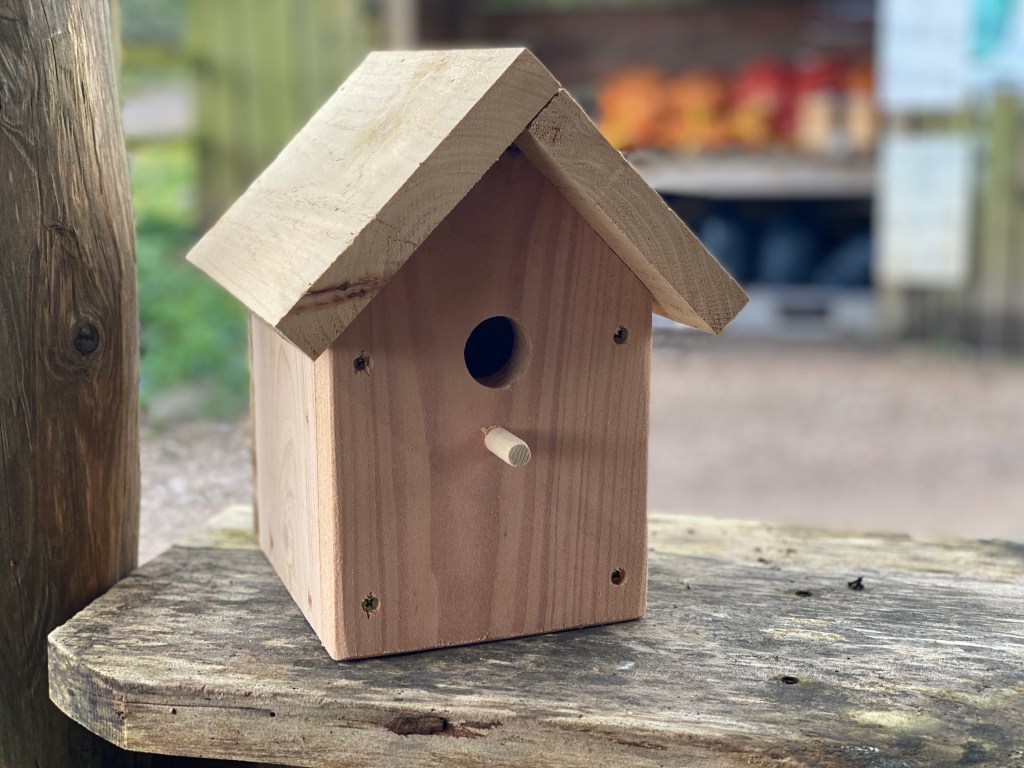
John – And we’re not just making stuff as well that’s like sold cheaply, it’s sold at like the going rate price.
Justina – Yeah, £1500, that bench and table.
John – Exactly, so it’s not … you know, that’s me going back to the meaningful activity, you’re building something that is of value, total value, not just in itself, but in what it gives you and like your … I can’t think of the words, I’m muddling my words today … not your inner-self, that sounds a bit too like poncy … it’s valuing the self-worth, and the confidence isn’t it, you know, you’ve made that and that’s like … like you say, somebody’s paid £1500 for that and they’re absolutely …
Justina – Chuffed with it.
John – Yeah, yeah.
Eric – It’s like being in the market gardens, when you’ve spent all your time … you know, growing plants and fruit and veg is a lengthy period, a lengthy thing, but you grow it, then you put it in the bags, you’ve done all the job and in here, you know, the customers come, wanting more of it, you know, and they’re really praising your salads, and like John said, the price is priced nicely, so you’re not just selling it cheap and cheerful just to shift it, you know, £2.50 for a bag of salad, you know, people in Asda, they would not pay that, but the people out here, they absolutely love it and it’s really rewarding to see that they … oh, we like that. They come back asking for more … can you do a quick … like the eggs and everything.
Justina – Yeah, I was just gonna say, I love the eggs.
John – I think the veg stall is one of the most important parts for bringing people in because the amount of cars you see drive by and they look and if there’s nothing there, they don’t stop, so they don’t come into the shop.
Justina – And everyone wants to eat fresh.
John – If they’re stopping because they’re seeing that that veg stall is full, then they come into the gate. It brings people in.
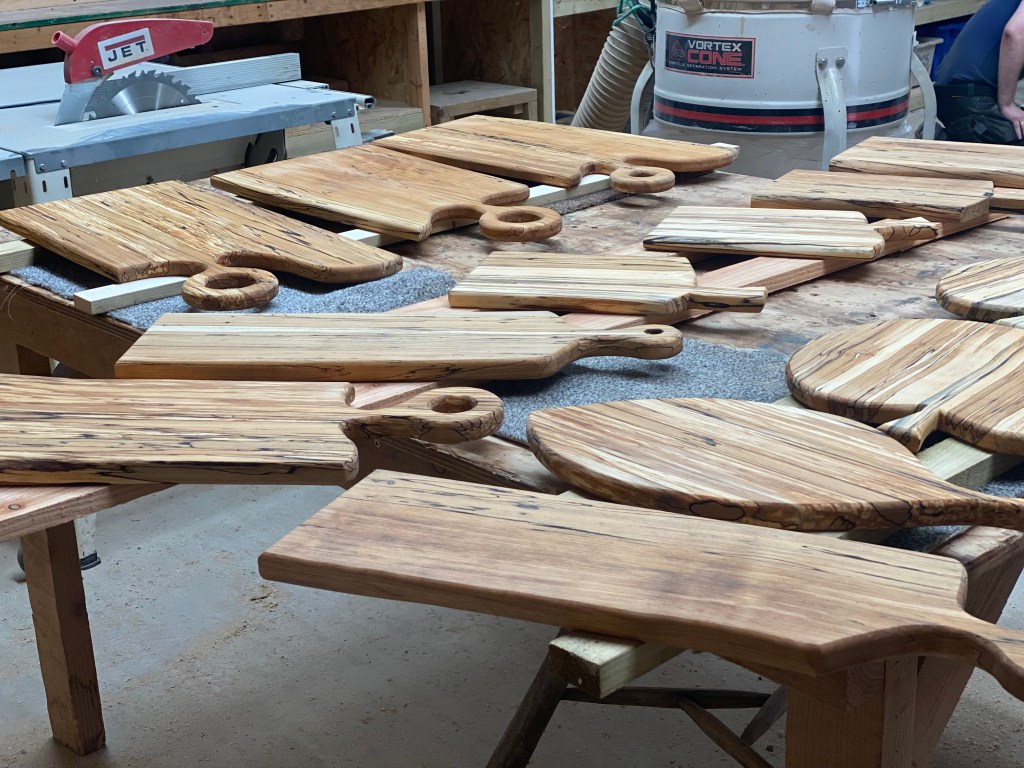
Eric – And it’s like, you know, little things like with yourself, especially when I first come here, like the chopping-board, in your head you think that’s well hard to make, I can’t make one of them, but like you teach someone how to do it, it’s simple enough, you walk away, like this is bloody brilliant, and then you see how much they’re going for in the shop and you’re like have I got to pay for this? No, that’s for you. Fucking wicked. I’ve got myself a 30 quid chopping-board and it’s like you made it. So that’s really good.
Lexa – I think the other thing that I realised with the market garden and with the other enterprises as well, but particularly the market garden, is it teaches you to be responsible for something because you have to look after something from a seed to, you know, when it’s just started to bud and then all the way through to the final product, and I think that that kind of process means you put a lot of care, you put a lot of nurturing into growing something, which teaches kind of responsibility and care.
John – I feel exactly the same way about some of the trainees that come here …. well, most of them.
Julie – Explain what you mean. You’re nurturing them.
John – Yeah and you’re seeing them grow as they go along and everything and building their self-confidence, self-worth and like liking themselves. A lot of people that come here don’t like themselves when they first come here or whatever and that. Josie was a prime example of somebody that … I didn’t even realise until after she’d left and she became a graduate that she was at a point where she was thinking of committing suicide and everything, and then when I saw the film, and I’d worked with her, alongside her for, I think it was eight months or whatever, but I knew what she was like when she came and when she went, it was just great, she was like a totally different person. But then to learn that she was even in a worse place then, at the start, than I thought she was. Good luck to the lady that’s typing all this up.
Justina – What was the question?
Julie – What are the benefits of the little various enterprises, like the cooking. I mean like you were saying with the quality, you know, the food is amazing. It’s not just any old stuff that they can get out for, you know, for nothing sort of thing, it is quality stuff isn’t it, and I think that makes a difference.
John – It’s beneficial to me as well, from working here and that, you know, you get the people that you’re working with day in, day out and that, and as much as they might be learning from you, you’re learning from those people all the time, you’re receiving it back, and them little things that you see about and that remind you of people that have been here. I don’t know, you just get a nice feel about yourself, and you think I wonder how they’re getting on or oh yeah, I liked doing that with those people.
Julie – Yeah, it’s rewarding isn’t it.
John – Rewarding, yeah, really rewarding, yeah.
Lexa – I think it’s also really good when people try something new and realise they like it, you know, they might think oh, I don’t want to do the pottery, but then they get into the pottery and they actually really enjoy themselves and that’s another avenue open to them, or again, with cooking, they might think I hate cooking or I can’t cook, and then they give it a go and you know, they’re shown how to do it, they enjoy it and then they want to keep doing it. So again, I think it kind of opens peoples options up in terms of, you know, things that they may potentially want to do either job wise or hobby wise and I think that’s great.
Eric – Yeah, going on what Lexa said, when I first come here, I didn’t really know much about plants, other than smoking ‘em.
[laughter]
Eric – But then you come here and then, you know, you get in touch with it. I’ve done the pottery bit. Don’t get me wrong, I weren’t too keen on it. I like being in the workshop with Graham chatting and the social element side of it, but then at that time I noticed the market garden, not many people wanted to do it and to me that’s perfect because I love doing it, I love organising stuff, I have control and I’m on me own. Then it’s gone from that to … I didn’t know nothing about plants and now I’m banging on about plants and soil every bloody day, doing a regenerative farming course from the RHS. So yeah, it’s really come a long way. It’s a chance to monopolise yourself.
[Applause]
Julie – Is there anything anybody wants to say before I turn the button off?
Marshall – You’re all amazing.
 A window into LandWorks
Love reading all the sucesses you have. Brilliant!!
Ann Holl ann@ambrook.net
LikeLike